


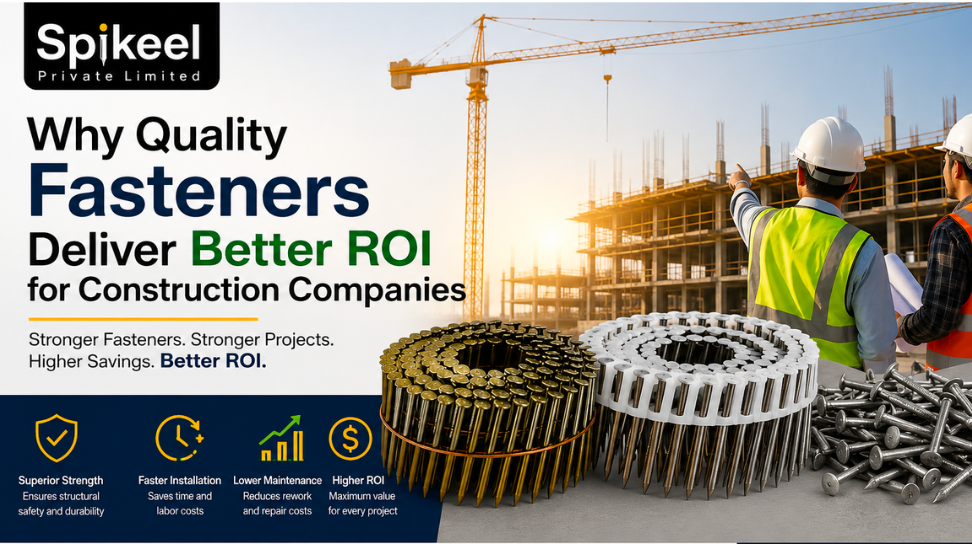
In the construction industry, every component contributes to the overall strength, durability, and performance of a structure. While major materials such as concrete and steel receive significant attention, Construction Fasteners play an equally critical role in ensuring structural integrity and long-term reliability.
From commercial buildings and industrial facilities to infrastructure projects and residential developments, the quality of fasteners directly impacts safety, maintenance costs, installation efficiency, and project longevity. Choosing high-quality fasteners is not merely a procurement decision—it is an investment that can significantly improve return on investment (ROI).
Construction companies that prioritize premium fasteners often experience fewer structural issues, reduced maintenance expenses, improved project timelines, and enhanced customer satisfaction. This article explores why quality Construction Fasteners provide superior ROI and why they are preferred across modern construction projects.
What Are Construction Fasteners?
Definition
Construction Fasteners are mechanical components used to join, secure, or assemble building materials in construction projects. These fasteners create strong and reliable connections between structural elements, ensuring stability and load-bearing performance.
Common construction fasteners include:
- Nails
- Screws
- Bolts
- Nuts
- Washers
- Anchors
- Structural connectors
These products are available in various materials, coatings, grades, and designs to meet different environmental and structural requirements.
Answer Snippet
Construction Fasteners are specialized mechanical components used to connect building materials securely, providing structural stability, safety, and long-term performance in construction projects.
How Do Construction Fasteners Work?
Construction fasteners function by creating mechanical connections between two or more materials. Depending on the application, the fastener may:
- Grip materials through threads
- Provide clamping force
- Distribute loads evenly
- Resist vibration and movement
- Withstand environmental exposure
High-quality fasteners are engineered to maintain their holding strength under demanding conditions, including heavy loads, temperature variations, moisture exposure, and dynamic stress.
Answer Snippet
Construction Fasteners work by creating secure mechanical connections that hold building components together while resisting loads, vibration, and environmental factors.
Key Features and Benefits of Quality Construction Fasteners
Superior Load-Bearing Capacity
Premium Structural Fasteners are manufactured using high-grade steel and advanced production processes. This allows them to withstand significant tensile and shear loads without failure.
Benefits include:
- Increased structural reliability
- Improved safety margins
- Reduced risk of connection failure
Enhanced Corrosion Resistance
Construction projects often face challenging environmental conditions.
Quality fasteners typically feature:
- Galvanized coatings
- Zinc plating
- Hot-dip galvanization
- Specialized corrosion-resistant finishes
These protective layers extend service life and reduce replacement costs.
Consistent Manufacturing Quality
Precision manufacturing ensures:
- Uniform dimensions
- Reliable thread engagement
- Better installation performance
- Reduced field issues
Consistency is particularly important for large-scale infrastructure and industrial projects.
Improved Safety
Reliable High-Strength Fasteners contribute directly to structural safety by maintaining secure connections over extended periods.
How Quality Fasteners Improve Industrial Performance
Many construction companies focus on upfront material costs without considering lifecycle expenses.
High-quality Industrial Fasteners improve performance in several ways.
Reduced Maintenance Costs
Poor-quality fasteners can loosen, corrode, or fail prematurely.
This often leads to:
- Repair work
- Structural inspections
- Component replacement
- Unexpected downtime
Quality fasteners significantly reduce these maintenance requirements.
Faster Installation
Precision-engineered fasteners provide:
- Better fit
- Consistent threading
- Reduced installation errors
This improves labor productivity and project efficiency.
Longer Service Life
Durable Building Fasteners maintain performance throughout the lifespan of the structure, minimizing replacement costs and maximizing ROI.
Lower Risk of Project Delays
Fastener failures can result in costly project disruptions.
Using premium fastening solutions helps ensure:
- Reliable performance
- Smooth construction progress
- Better project scheduling
Benefits of Construction Fasteners for ROI
Lower Total Cost of Ownership
Although premium fasteners may have a higher initial purchase price, they often deliver lower lifetime costs through:
- Reduced maintenance
- Longer lifespan
- Fewer repairs
- Increased reliability
Better Structural Integrity
Strong connections improve overall building performance and reduce future liabilities.
Reduced Warranty Claims
Construction defects associated with fastening failures can lead to expensive warranty obligations.
Quality fasteners help minimize such risks.
Improved Reputation
Projects completed using dependable materials often experience fewer post-construction issues, improving contractor credibility and client satisfaction.
Answer Snippet
Quality Construction Fasteners deliver better ROI by reducing maintenance costs, extending service life, improving safety, and minimizing the risk of structural failures.
Applications Across Industries
Commercial Construction
Fasteners are widely used in:
- Office buildings
- Shopping centers
- Hotels
- Educational institutions
Industrial Facilities
Industrial projects require durable fastening systems for:
- Manufacturing plants
- Warehouses
- Processing facilities
- Heavy equipment installations
Infrastructure Projects
Infrastructure applications include:
- Bridges
- Highways
- Rail systems
- Utility installations
Residential Construction
Builders rely on Building Fasteners for:
- Roofing systems
- Framing
- Decking
- Interior installations
Renewable Energy Projects
Fasteners play a crucial role in:
- Solar panel mounting systems
- Wind energy structures
- Utility-scale renewable installations
Why Industries Prefer Construction Fasteners
Industries increasingly prioritize quality fastening solutions because they provide:
Reliable Structural Performance
Consistent fastening quality supports long-term structural stability.
Compliance with Industry Standards
Premium manufacturers follow strict quality standards and testing procedures.
Improved Project Efficiency
Reliable fasteners reduce installation challenges and improve workflow efficiency.
Long-Term Cost Savings
Organizations recognize that lifecycle value often outweighs initial procurement cost.
Better Environmental Performance
Long-lasting fasteners reduce material waste and replacement frequency.
Factors to Consider Before Selecting Construction Fasteners
Material Selection
Choose materials based on:
- Load requirements
- Environmental exposure
- Corrosion resistance needs
Common materials include:
- Carbon steel
- Stainless steel
- Alloy steel
Strength Requirements
Evaluate:
- Tensile strength
- Shear strength
- Load-bearing capacity
Coating and Surface Treatment
Protective coatings improve durability and resistance to corrosion.
Application Environment
Consider:
- Indoor conditions
- Outdoor exposure
- Marine environments
- Industrial settings
Manufacturer Quality Standards
Partner with manufacturers that maintain:
- Consistent quality control
- Technical expertise
- Product traceability
- Industry certifications
Common Mistakes to Avoid
Choosing Based Only on Price
Lowest-cost fasteners often lead to higher lifecycle expenses.
Ignoring Corrosion Requirements
Selecting the wrong coating can significantly reduce service life.
Using Incorrect Fastener Grades
Insufficient strength can compromise structural performance.
Overlooking Manufacturer Reputation
Reliable suppliers typically offer better quality assurance and technical support.
Failing to Verify Specifications
Always ensure fasteners meet project engineering requirements.
How to Choose the Right Construction Fasteners
When selecting Construction Fasteners, consider:
- Project load requirements
- Environmental conditions
- Material compatibility
- Corrosion resistance needs
- Applicable building codes
- Fastener certifications
- Manufacturer reliability
- Long-term maintenance expectations
Consulting experienced fastener manufacturers can help identify the most suitable solution for each application.
Why Choose Spikeel?
Construction companies require dependable fastening solutions that consistently meet performance expectations.
Spikeel focuses on:
- Industry expertise in fastening solutions
- High-quality manufacturing standards
- Consistent product performance
- Custom manufacturing capabilities
- Reliable supply chain support
- Technical assistance for application selection
- Customer-focused service approach
- Commitment to quality and reliability
By delivering dependable fastening solutions, Spikeel supports construction companies in achieving long-term project success and improved ROI.
Conclusion
Quality Construction Fasteners may represent a small portion of overall project costs, but they have a substantial impact on structural integrity, maintenance expenses, project efficiency, and long-term performance.
Investing in premium Industrial Fasteners, Structural Fasteners, High-Strength Fasteners, and Building Fasteners helps construction companies reduce lifecycle costs while improving safety and reliability. As construction projects become increasingly complex, selecting high-quality fastening solutions remains one of the most effective ways to maximize return on investment and ensure lasting project success.