


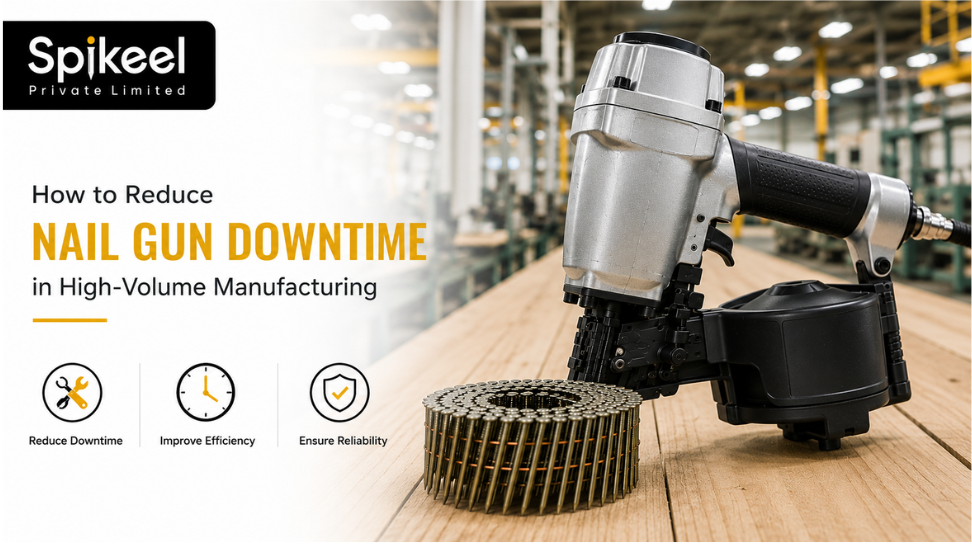
In high-volume manufacturing, every second counts. Whether you’re producing pallets, furniture, wooden packaging, or construction components, an unexpected nail gun stoppage can interrupt production, increase labour costs, and delay deliveries.
Frequent nail gun downtime isn’t always caused by worn-out tools. In many cases, the problem lies in poor maintenance, low-quality coil nails, incorrect air pressure, or operator mistakes.
This guide explains practical ways manufacturers can minimise nail gun downtime, improve production efficiency, and maximise the lifespan of fastening equipment.
Why Nail Gun Downtime Matters
Even a few minutes of downtime can create significant production losses when thousands of nails are driven every hour.
Common consequences include:
- Reduced production output
- Increased labour costs
- Missed delivery schedules
- Higher maintenance expenses
- Poor fastening quality
- More defective products
For factories operating multiple nail guns simultaneously, even small improvements in uptime can significantly boost profitability.
Common Causes of Nail Gun Downtime
1. Nail Jams
Nail jams are one of the biggest productivity killers.
They usually occur because of:
- Low-quality coil nails
- Bent nails
- Incorrect nail angle
- Damaged nail strips
- Dirty magazine
Prevention Tips
- Use premium-quality coil nails.
- Inspect nails before loading.
- Clean magazines regularly.
- Replace damaged feeders immediately.
2. Poor Quality Coil Nails
Not all coil nails are manufactured to the same standard.
Inferior nails often have:
- Inconsistent shank diameter
- Weak welding wire
- Uneven collation
- Rust formation
- Bent nail points
These defects increase feeding problems and cause frequent tool stoppages.
Choosing precision-manufactured coil nails helps ensure smooth feeding and consistent fastening performance.
3. Incorrect Air Pressure
Most pneumatic nail guns require operating pressure within the manufacturer’s recommended range.
Problems caused by incorrect PSI include:
Too Low
- Incomplete nail driving
- Double firing
- Misfires
Too High
- Premature tool wear
- Damaged seals
- Nail overdriving
Always monitor compressor pressure during production.
4. Lack of Preventive Maintenance
Many factories only repair tools after failure.
Preventive maintenance dramatically reduces downtime.
Daily checklist:
- Clean dust and debris
- Lubricate moving parts
- Check air fittings
- Inspect trigger safety
- Examine O-rings
- Verify magazine condition
Weekly inspections help detect wear before breakdowns occur.
5. Dirty Air Supply
Compressed air often contains:
- Moisture
- Dust
- Oil contamination
These contaminants damage internal components.
Installing:
- Air filters
- Moisture separators
- Pressure regulators
can significantly extend tool life.
Best Practices to Reduce Nail Gun Downtime
Use High-Quality Coil Nails
The quality of your fasteners directly affects equipment reliability.
Look for:
- Uniform nail dimensions
- Strong wire collation
- Corrosion-resistant coating
- Sharp points
- Consistent manufacturing tolerances
Reliable coil nails minimise jams and improve driving accuracy.
Standardise Tool Maintenance
Create a maintenance schedule rather than relying on reactive repairs.
Recommended intervals:
| Frequency | Maintenance |
| Daily | Cleaning & lubrication |
| Weekly | O-ring inspection |
| Monthly | Magazine inspection |
| Quarterly | Full service |
| Annually | Tool rebuild if required |
Train Operators Properly
Many stoppages occur because operators:
- Load nails incorrectly
- Use incorrect air pressure
- Ignore warning signs
- Continue operating damaged tools
Proper training reduces human error and extends equipment life.
Keep Spare Parts Ready
Avoid long production interruptions by stocking:
- O-rings
- Driver blades
- Trigger valves
- Springs
- Feed pawls
- Air fittings
Replacing worn parts immediately prevents larger failures.
Optimise Air Compressor Performance
Maintain compressors by:
- Draining moisture daily
- Replacing filters
- Checking pressure stability
- Inspecting hoses for leaks
A stable air supply ensures consistent nail driving performance.
Signs Your Nail Gun Needs Immediate Service
Stop using the tool if you notice:
- Frequent jams
- Air leaks
- Misfires
- Reduced driving power
- Double firing
- Broken magazine
- Excessive vibration
Ignoring these warning signs can lead to expensive repairs.
Choosing the Right Coil Nails Matters
Selecting the correct coil nails is just as important as maintaining the nail gun.
Factors to consider include:
- Nail diameter
- Nail length
- Shank type
- Head style
- Surface coating
- Wire or plastic collation
- Compatibility with the nail gun
Using the wrong nails often results in poor feeding and increased downtime.
Productivity Tips for High-Volume Manufacturing
Leading manufacturers reduce downtime by implementing:
- Preventive maintenance schedules
- Quality inspection of fasteners
- Operator training programs
- Air system monitoring
- Spare tool rotation
- Predictive maintenance software
- Inventory control for replacement parts
Together, these practices improve uptime, product quality, and operational efficiency.
Why High-Quality Fasteners Improve ROI
Premium coil nails may cost slightly more initially, but they often reduce:
- Tool repairs
- Production delays
- Labour costs
- Product defects
- Maintenance expenses
The result is a lower total cost of ownership and higher long-term productivity.
Conclusion
Reducing nail gun downtime is essential for maintaining productivity in high-volume manufacturing. By combining preventive maintenance, reliable air systems, trained operators, and premium-quality coil nails, manufacturers can minimise disruptions, extend tool life, and improve overall operational efficiency.
Investing in dependable fastening solutions and proactive maintenance practices not only reduces repair costs but also ensures consistent production quality and higher profitability over time.